A Gravitational Field is an example of a Field of Force.
It is a region of space where a mass experiences a force.
Nature of the Force
Gravitational forces are always attractive.
The force always acts towards the centre of mass of the mass creating the field.
Representing Gravitational Fields
Gravitational Field Lines
A gravitational field can be represented by using Gravitational Field Lines.
A gravitational field line is an arrow showing the direction of gravitational force acting on a test mass.
The density (number of field lines per unit area) of field lines represents the strength of the gravitational field; The closer the field lines the stronger the field.
Types of Gravitational Fields
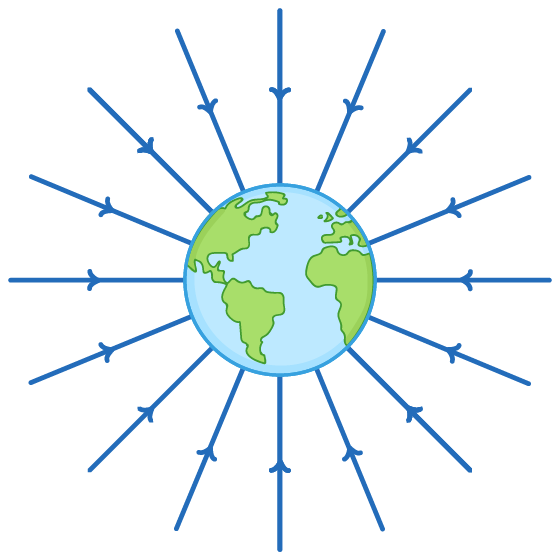
Radial Field
Field lines point towards the centre of a point mass or uniform sphere.
Gravitational field around the Earth
Spacing of Field Lines
As the distance from the centre of the point mass increases, the separation of the field lines increases, and line density decreases, indicating that the strength of the gravitational field decreases.
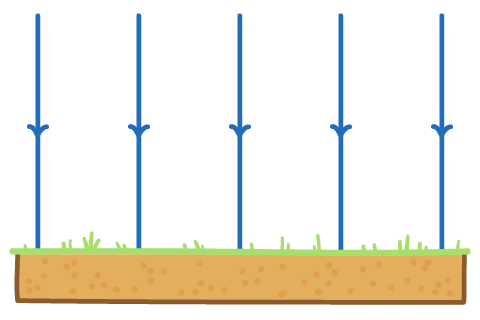
Uniform Field
Field lines are parallel to each other and equally spaced
Gravitational field near the Earth's surface
Why is gravitational field considered to be uniform near earth’s surface
Important
At surface, gravitational field lines are radial.
Height/change in height above surface is very much smaller than Earth’s radius (h≪R).
field lines are approximately parallel.
Field strength is represented by the density of field lines.
Since field lines are parallel and equally spaced, density and therefore field strength is constant.
Gravitational force between point masses
Point Mass Approximation
The Point Mass Approximation
For a point outside a uniform sphere (like a planet), the mass of the sphere can be considered to be completely concentrated as a point mass at its centre.
Condition: This is only valid if the sphere has uniform density (or spherical symmetry) and the distance r is greater than the radius of the sphere.
Newton’s Law of Gravitation
Newton's Law of Gravitation
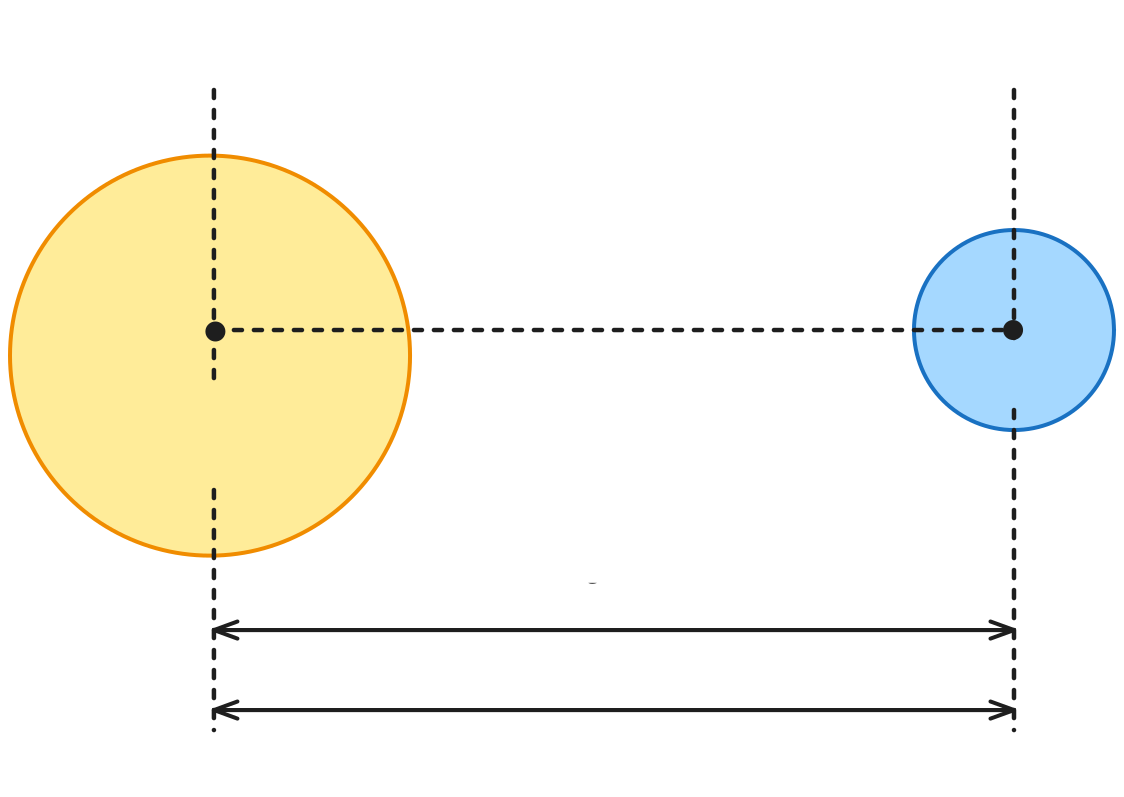
The gravitational force of attraction between two point masses is directly proportional to the product of their masses
and inversely proportional to the square of their separation.
Representation of M, m, r, F
Derivation
FF∝r2Mm=r2GMm
Where G is the Gravitational Constant, G=6.67×10⁻¹¹Nm2kg−2
Circular Orbits
Satellites
Satellites
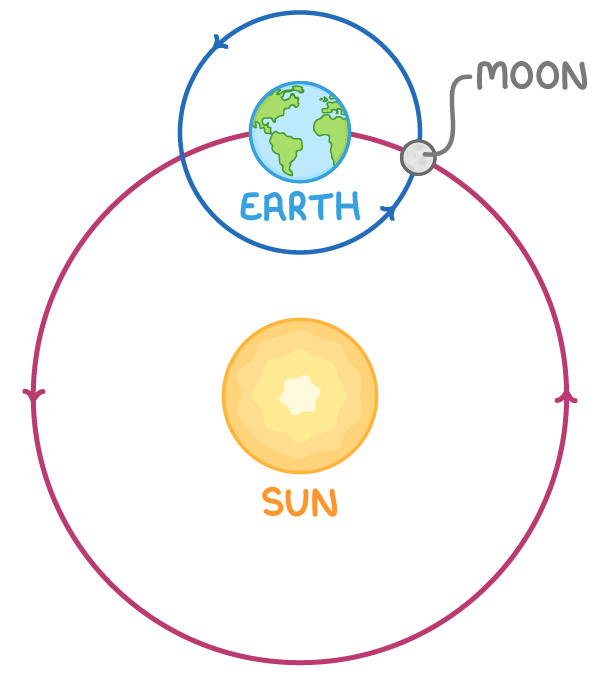
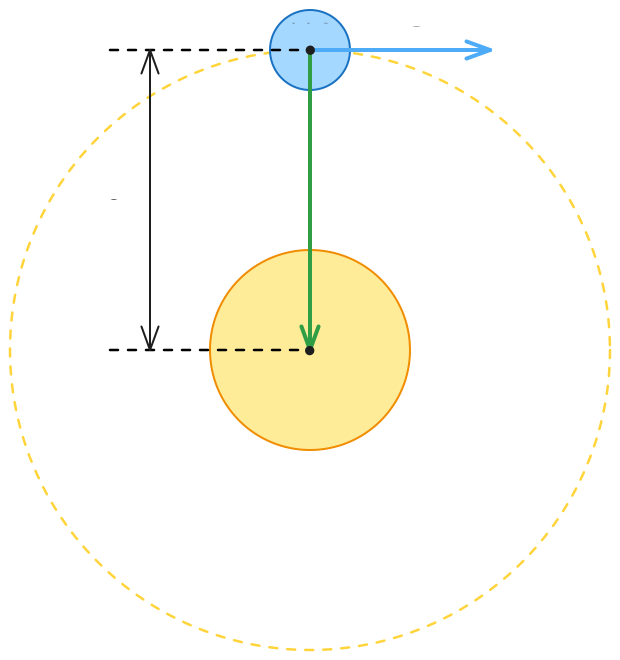
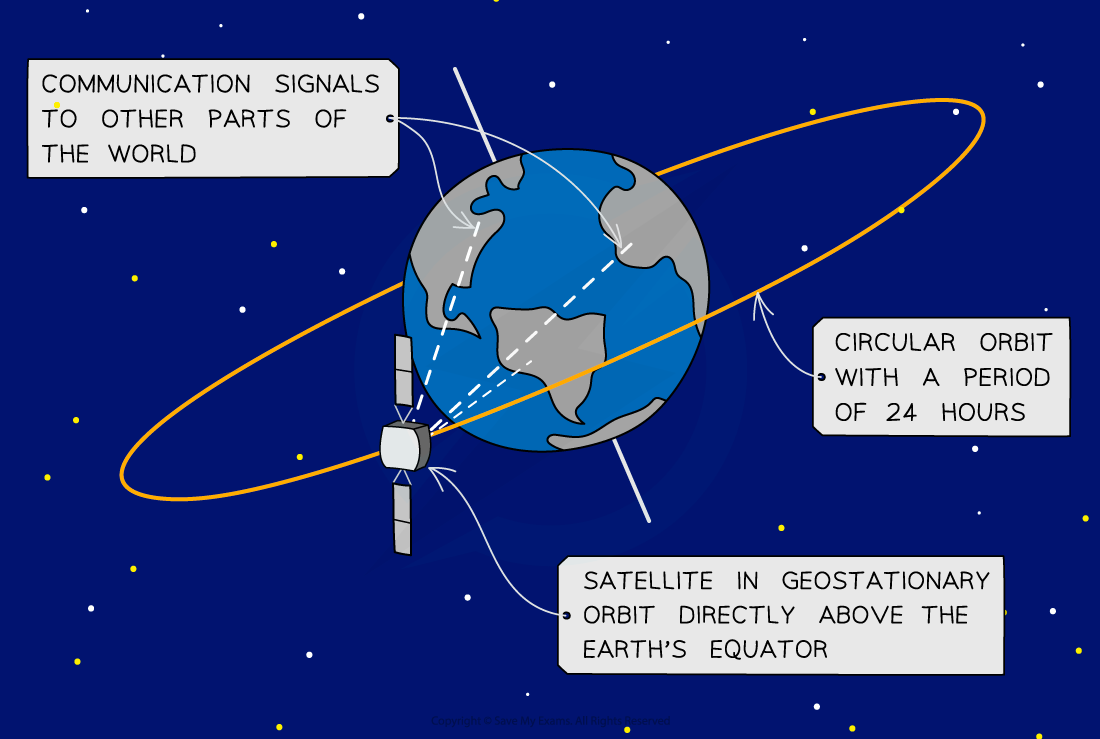
A satellite is a mass that orbits (moves in circular motion) around a larger mass.
The Earth is a satellite orbiting the Sun and the Moon is a satellite orbiting the Earth.
How does a satellite stay in orbit?
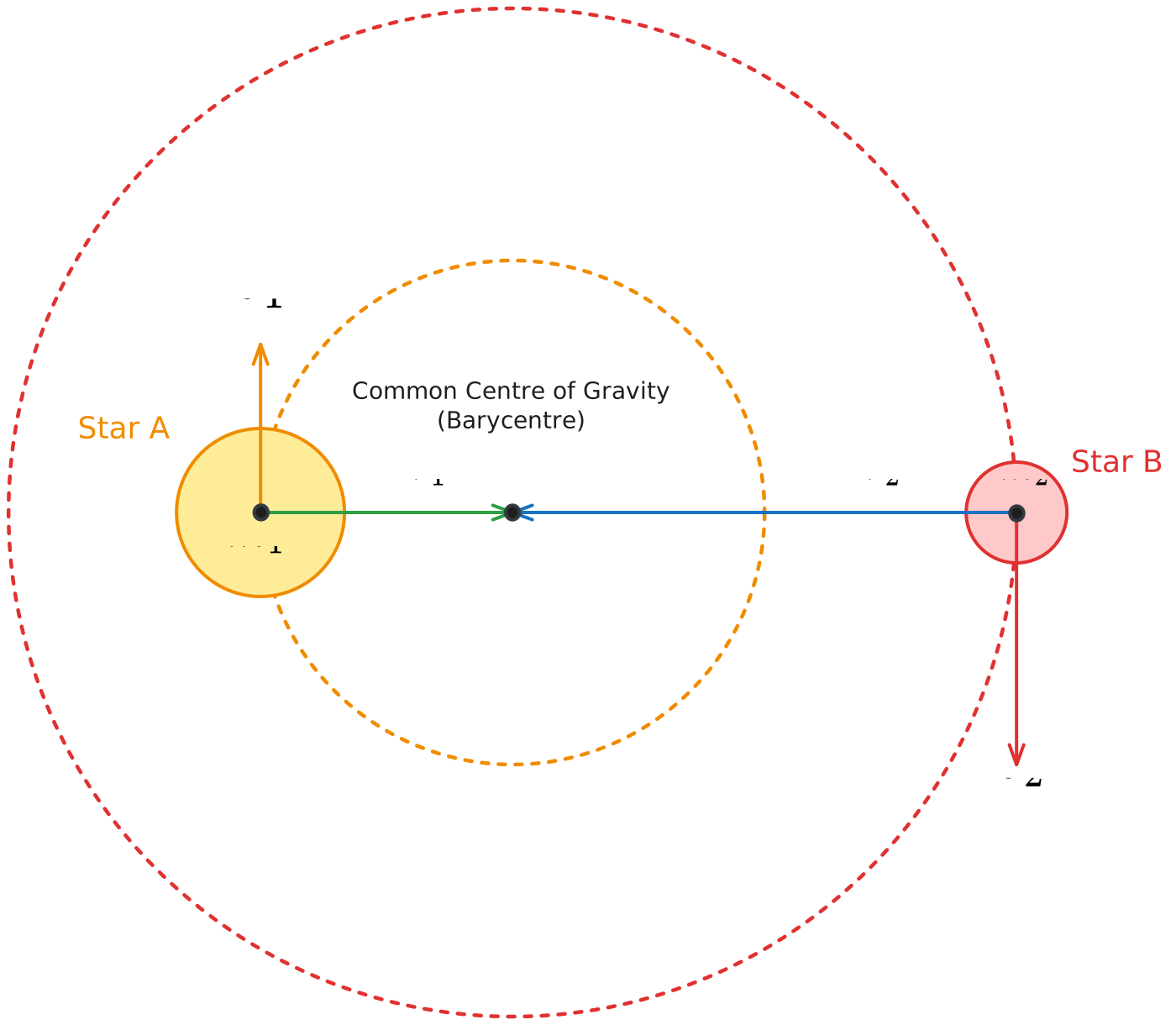
The gravitational force between the satellite and the mass which it orbits provides the centripetal force needed to keep the satellite moving in circular motion around the mass.