17.5 Energy in Simple Harmonic Motion
Interchange Between Kinetic and Potential Energy
Conservation of Energy
- In an undamped SHM system, energy continuously transfers between Kinetic Energy () and Potential Energy ().
- Total Energy remains constant.
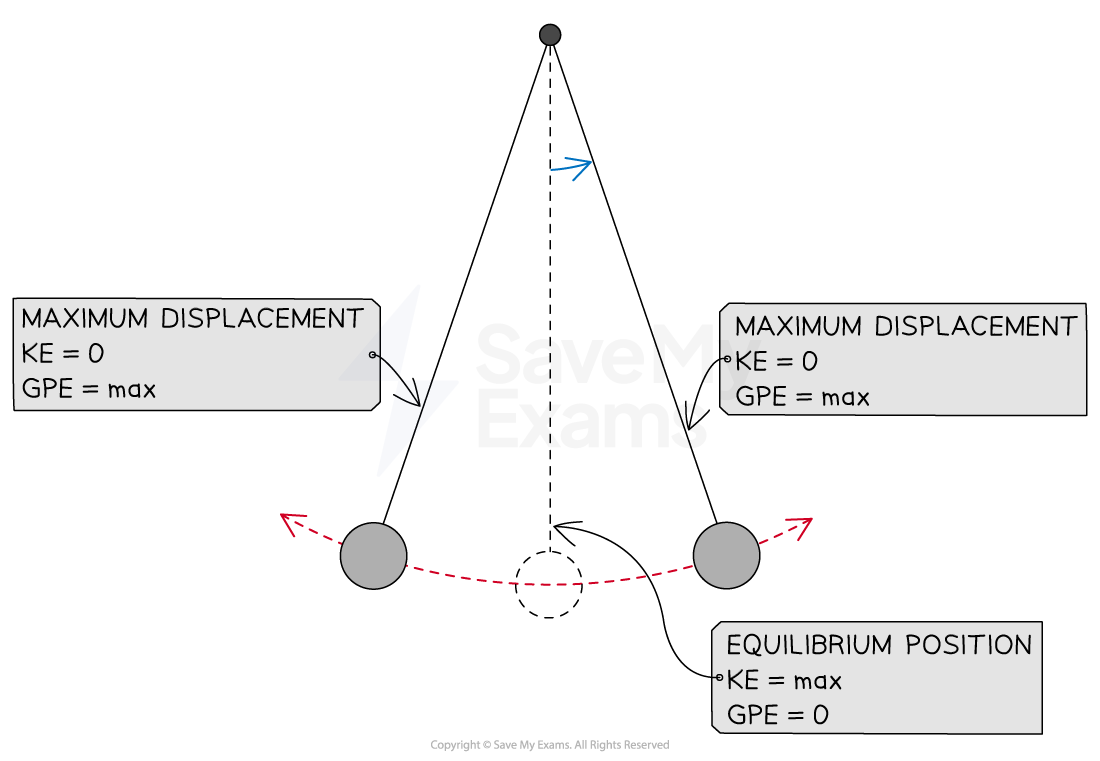
Kinetic Energy
Derivation: Kinetic Energy in SHM
The kinetic energy of an oscillator is given by the standard equation:
1. Kinetic Energy in terms of displacement () Substituting the SHM velocity-displacement equation :
2. Kinetic Energy in terms of time () Alternatively, substituting the SHM velocity-time equation :
3. Maximum Kinetic Energy Kinetic energy reaches its maximum at the equilibrium position, where displacement . Substituting into our first derived equation:
Total Energy
- Because Potential Energy is zero at equilibrium, the maximum kinetic energy is equal to the Total Energy of the system.
Therefore, the Total Energy () of the system is given by: